
The different forms of pandan: leaves, paste, powder, or extract, which to choose?
🌱 Pandan: An Ingredient with Many Faces
Originating from Southeast Asia, pandan (Pandanus amaryllifolius) is an essential ingredient in tropical cuisine. But when discovering this plant in Europe, one often wonders: which form to choose? Powder, paste, extract, leaves… each has its specific characteristics.
Here's a guide to help you easily navigate them.
🍃 1. Fresh or Dried Leaves
Description:
– Long, dark green leaves, sometimes available in fresh or frozen sections.
Uses:
– Infusions, cooking in rice, wrapping meats/fish.
– Delicate, slightly sweet fragrance.
Advantages:
– Raw and natural product, zero processing.
– Subtle and authentic aroma.
Limitations:
– Not practical for storage.
– Milder aroma than concentrated extracts.
🧴 2. Liquid Pandan (Extract or Essence)
Description:
– Bright green liquid, sold in bottles. Be careful with the ingredients: some versions are artificial.
Uses:
– Coloring and flavoring desserts, drinks, cakes.
Advantages:
– Easy to use, a few drops are enough.
– Very fragrant, ideal for quick preparations.
Limitations:
– Some commercial extracts contain synthetic colors or flavors.
💡 Opt for natural extracts, without additives or colorants.
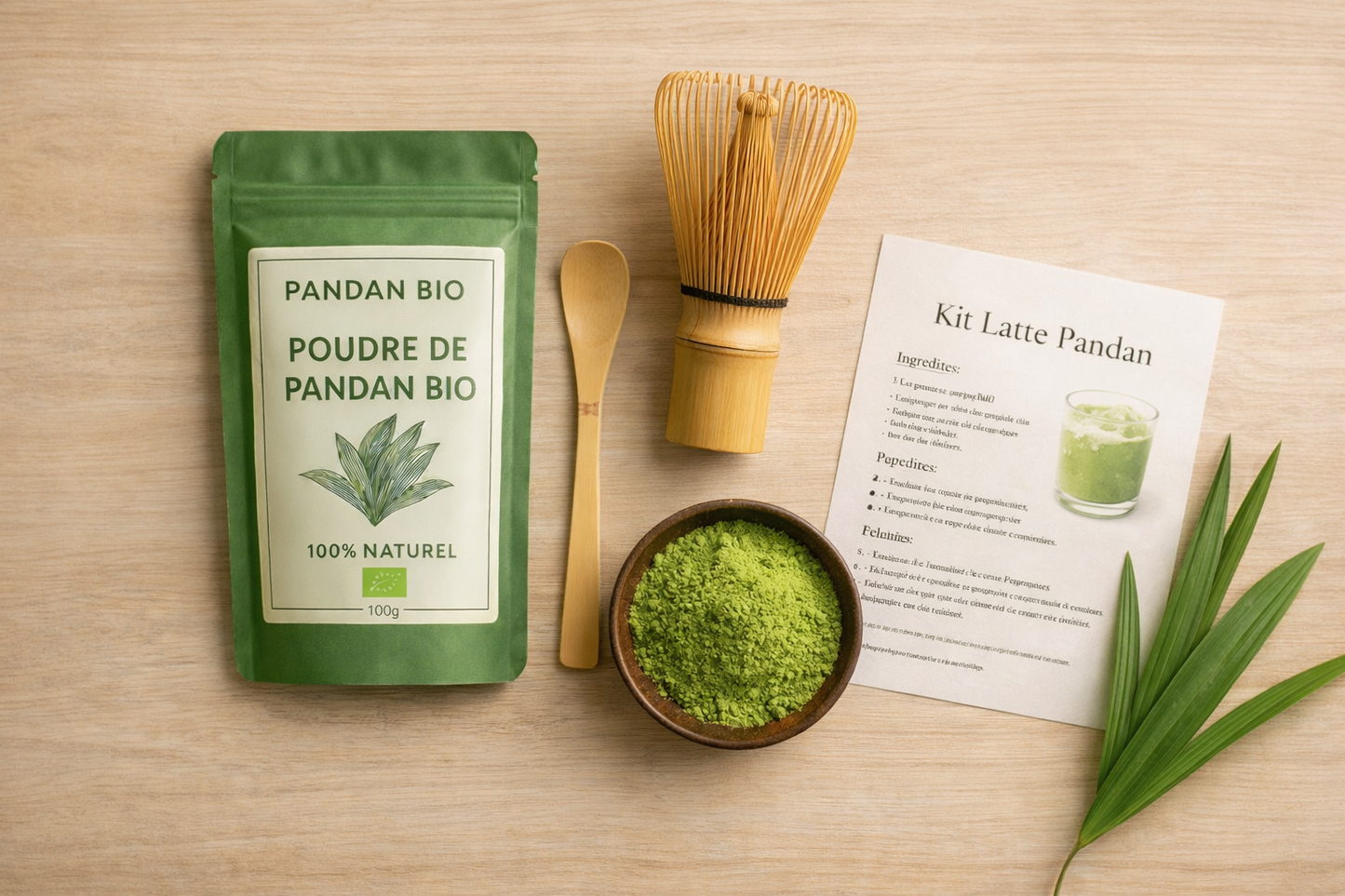
🟢 3. Pandan Powder
Description:
– Green powder obtained by drying and grinding the leaves. This is the most versatile and easy-to-store form.
Uses:
– In pastries, drinks, lattes, smoothies, pancake batters, sauces…
Advantages:
– 100% pure, easy to measure, long shelf life.
– Perfect for everyday culinary uses.
Limitations:
– Slightly less intense aroma than some extracts, but much healthier.
🛍️ E-commerce tip: If you sell pandan powder, guide your visitors towards this form for regular and natural use.
🧁 4. Pandan Paste
Description:
– A mixture of ground pandan leaves, often with sugar or oil.
Uses:
– Asian pastries (cakes, mochi, flans…), creams or toppings.
Advantages:
– Smooth texture, intense flavor, ready to use.
Limitations:
– Less versatile, sweeter, requires refrigeration.
🧭 How to choose?
| Need | Ideal form |
|---|---|
| Infusions, fragrant rice | Fresh or dried leaves |
| Quick desserts, colored drinks | Natural extract or paste |
| Everyday cooking, smoothies, homemade pastries | Pandan powder |
| Traditional Asian preparations | Pandan paste |
📌 Conclusion
There isn't one form of pandan that's better than the others; it all depends on your needs! For versatile, natural, and practical use, pandan powder is the ideal solution. It concentrates the plant's benefits while offering flexibility in culinary use.


All about the world of Pandan
View all-

What does pandan taste like? Precise descriptio...
Vanilla, almond, coconut… the taste of pandan is as intriguing as it is baffling. A clear sensory description and comparisons to understand its unique aroma.
What does pandan taste like? Precise descriptio...
Vanilla, almond, coconut… the taste of pandan is as intriguing as it is baffling. A clear sensory description and comparisons to understand its unique aroma.
-

Why does your pandan have no taste? Causes and ...
A flavourless pandan is often a sign of a quality or usage problem. Origin, powder, dosage, storage: here's why the taste disappears and how to remedy it.
Why does your pandan have no taste? Causes and ...
A flavourless pandan is often a sign of a quality or usage problem. Origin, powder, dosage, storage: here's why the taste disappears and how to remedy it.
-

Can you consume pandan every day?
Can pandan be consumed daily without risk? Between Asian traditions, nutritional common sense, and limitations, here's what you need to know before making it a habit.
Can you consume pandan every day?
Can pandan be consumed daily without risk? Between Asian traditions, nutritional common sense, and limitations, here's what you need to know before making it a habit.
-

Pandan and health: what does science really say?
Pandan is often associated with well-being, but what do scientific studies actually say? We take stock of traditions, available data, and limitations, without exaggeration.
Pandan and health: what does science really say?
Pandan is often associated with well-being, but what do scientific studies actually say? We take stock of traditions, available data, and limitations, without exaggeration.


- Choosing a selection results in a full page refresh.
- Opens in a new window.