What does pandan taste like? Precise description and comparisons
Pandan is often presented as an aromatic plant with a unique taste, difficult to compare to any other ingredient. For those who have never tasted it, one question always comes up: what does pandan really taste like?
In this article, we offer a precise sensory description of the taste of pandan, as well as useful comparisons to better understand its aromatic profile and know what to expect before using it.
The taste of pandan: a flavor difficult to classify
Pandan does not have a strong or dominant flavor like some spices. Its taste is above all aromatic, sweet, and round. It is often perceived as slightly sweet, without containing sugar, with a very subtle vegetal sensation.
This delicate character explains why some people have difficulty identifying it immediately, especially when used in small quantities or in rich preparations.
What does pandan evoke on the palate?
To describe the taste of pandan, several comparisons frequently come up. It often evokes vanilla for its sweetness, almond for its slightly milky side, and coconut for its exotic roundness. However, these associations are approximate, as pandan has its own unique aromatic signature.
Unlike vanilla, pandan is neither sweet nor warm. Unlike almond, it is not fatty. And unlike coconut, it never dominates other flavors. It acts more like a fragrance than a primary taste.
The taste of pandan according to its form
The taste of pandan varies according to its form. Fresh leaves offer the most intense and complex aroma. When infused, they gradually release their aromatic notes.
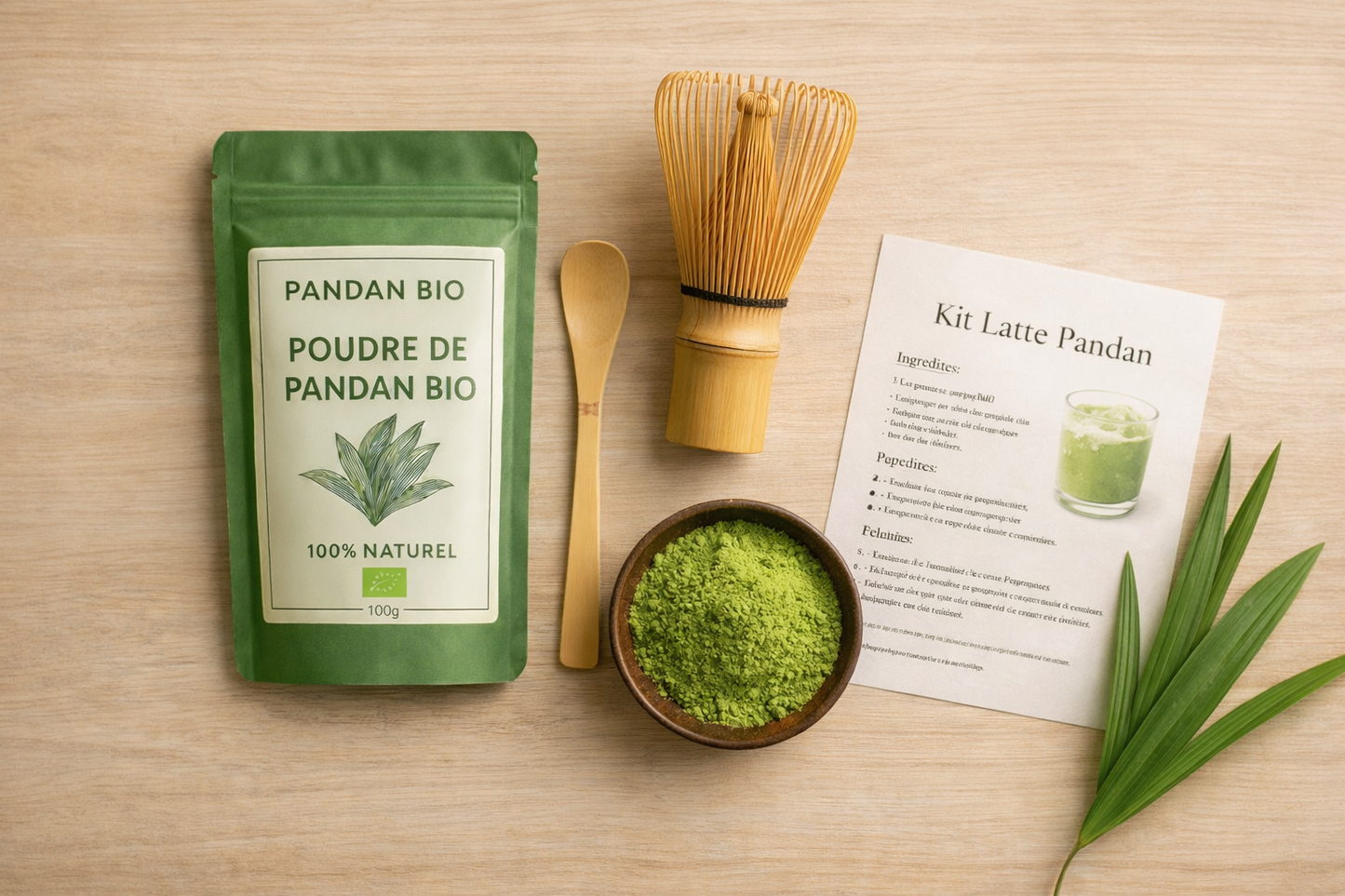
Pandan powder has a more concentrated but sometimes more discreet taste, depending on the quality and processing method. A natural and well-preserved powder restores an authentic aroma, while a poor-quality powder can seem bland.
Pandan and aromatic intensity
Pandan is often underestimated because it is used like a strong spice, whereas it is a subtle aromatic ingredient. Its taste should not be aggressive or overpowering.
When well-dosed, pandan provides a fragrant and elegant sensation that develops in the background. It is precisely this discretion that makes it unique and interesting in cooking.
Why some people don't taste pandan
Several factors can explain why the taste of pandan is sometimes imperceptible. Too low a dosage, poor quality powder, or poor dispersion in the preparation are the most frequent causes.
The gustatory context also plays a role. In a very sweet or very fatty preparation, pandan can take a back seat. Conversely, in a hot drink or a light dairy base, its aroma is more easily perceptible.
Pandan, taste, and expectations
Pandan can be disappointing when one expects an intense or immediately identifiable flavor. It is more appealing when considered as a food fragrance, intended to bring a refined aromatic touch.
This difference in expectation explains why pandan is particularly appreciated in Asian cuisines, where balance and subtlety take precedence over aromatic power.
Conclusion
The taste of pandan is sweet, aromatic, and subtle. It evokes notes of vanilla, almond, and coconut, without ever being completely confused with them. More than a dominant taste, pandan is a culinary fragrance, designed to enrich a recipe without masking it.
Well understood and well used, pandan reveals an elegant and unique aromatic signature, which explains its growing success among lovers of delicate flavors.